

Arista DCS-7800R3-48CQMS-LC | 7800R3 48-Port 100G QSFP Line Card, Enhanced MACsec
SKU:DCS-7800R3-48CQMS-LC
Stock Status: Enquire
Need a quote or bulk pricing? Answered within 20 minutes, Sydney business hours.
Description
Description
The DCS-7800R3-48CQMS-LC is a 48-port 100GbE QSFP100 line card for the Arista 7800R3 Series modular chassis. It is built for large-scale data centre and cloud layer 2/3 networks, internet peering, secure data centre interconnect, and carrier or WAN edge and core roles. Enhanced MACsec on every port suits encrypted point-to-point links.
The card provides 48 QSFP100 ports, which can run as 48x 100G, 48x 50G, 48x 40G, or up to 96x 25G or 96x 10G using breakouts. Throughput is 4.8 Tbps (9.6 Tbps full duplex) with an 8 GB port buffer, supporting a fully scheduled lossless architecture with per-port Virtual Output Queuing. This variant has Enhanced MACsec on all ports and no on-card CPU, which separates it from the 48CQ2-LC (no MACsec) and the 48CQM2-LC (MACsec with CPU). Typical power draw is 501 W, with a 666 W maximum, excluding optics.
It fits the DCS-7804, DCS-7808, DCS-7812, DCS-7816 and DCS-7816L chassis and requires a supervisor module. The QSFP ports accept 100GBASE SR4, XSR4, SWDM4, LR4, LR, CWDM4, FR, DR, PSM4 and ERL4 optics, as well as AOC and CR4 cables. 40G QSFP+ optics and 50G, 25G and 10G breakouts are also supported.
Enquire with XS Network Tech for new or used pricing and availability.
Features
Features
Warranty
Warranty
All technical data should be verified on the manufacturer data sheets.
View full details
What is the difference between add to cart and request a quote?
Add to Cart lets you purchase in-stock products immediately at listed pricing.
Request a Quote is for customised pricing, volume-based deals, or orders that need a tailored response.
specs-tabs
Collapsible content
Technical Specifications
FAQs
Technical Specifications
FAQs
Related Products
-
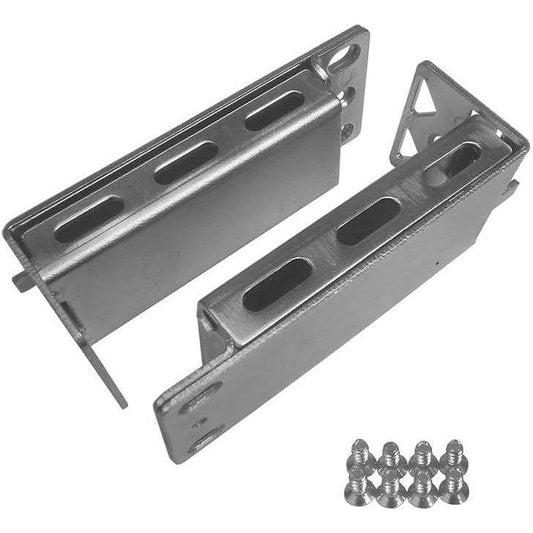 Vendor:Cisco
Cisco RCKMNT-CMPCT-1K | 1RU Rack Mount Kit for Compact Switches, 19in
RCKMNT-CMPCT-1K
In stock
Vendor:CiscoThis 1RU rack mount kit allows compact Cisco switches to be installed in a standard 19-inch EIA-310 ... -
 Vendor:Cisco
Cisco RCKMNT-19-CMPCT | 19-in 1RU Rackmount Kit for Compact Switches
RCKMNT-19-CMPCT
In stock
Vendor:CiscoA 19-inch, 1RU rackmount kit designed for Cisco compact switch models, allowing the switch to be ins... -
 Vendor:Cisco
Cisco RACKMNT-19-CMPACT | Catalyst 9200CX 19-Inch Rackmount Kit, Compact Switches
RACKMNT-19-CMPACT
In stock
Vendor:CiscoThis 19-inch rackmount kit is designed for Cisco Catalyst 9200CX compact access switches. It include... -
 Vendor:Cisco
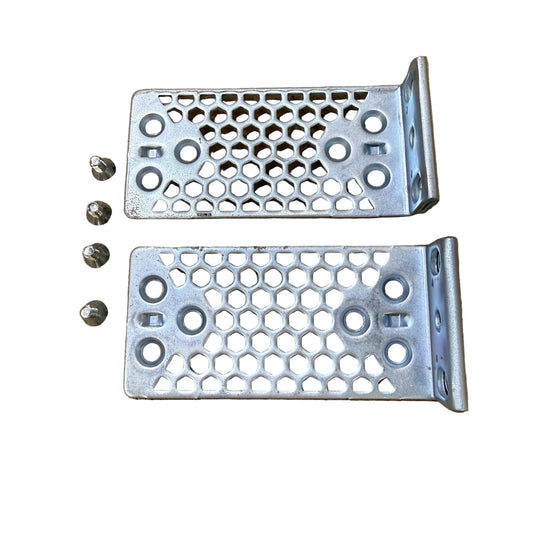
Cisco RACK-KIT-T1 | Rack Mount Kit, 19/23/24-Inch and ETSI Type 1
RACK-KIT-T1
In stock
Vendor:CiscoThis rack mount kit is designed for installing network equipment into standard equipment racks. It s... -
Vendor:Cisco
Cisco ACC-KIT-T1 | Rack Mount Kit, Type 1, Fixed Front Ears + Screws
ACC-KIT-T1
In stock
Vendor:CiscoA 19-inch rack mount kit for select Cisco network appliances, supplied with fixed front ears and a s... -
 Vendor:Cisco
Cisco C9500-ACCKITH-19I | Catalyst 9500 High-End 19" Rack Mount Kit
C9500-ACCKITH-19I
In stock
Vendor:CiscoThis 19-inch rack mount accessory kit is designed for the high-end Cisco Catalyst 9500 Series switch... -
 Vendor:Cisco
Cisco C9500-4PTH-KIT | 4-Post Rack Mount Kit for Catalyst 9500 Switch
C9500-4PTH-KIT
In stock
Vendor:CiscoThis 4-post rack mount kit is designed for installing Catalyst 9500 series switches into standard fo... -
 Vendor:Cisco
Cisco C9300L-STACK-KIT | Catalyst 9300L Stacking Kit, StackWise-320, 0.5m
C9300L-STACK-KIT
In stock
Vendor:CiscoThe Catalyst 9300L Stacking Kit is the StackWise-320 backplane stacking accessory for Catalyst 9300L...


Recently Viewed
-

Request a Quote
Looking for competitive pricing? Submit a request, and our team will provide a tailored quote that fits your needs.

